
You can clean a set of outboard injectors with about fifteen dollars of parts and an air compressor you already own.
People send injectors out for ultrasonic cleaning and flow testing, or worse, buy new ones. For a dirty set that just needs the varnish and crud pushed out, you don’t need either. A piece of fuel hose, two clamps, a can of Power Tune, and a way to pulse power to the injector will get you there.
I did half of them on the bench and half right on the engine, on a Yamaha 300 HPDI we’ve been trying to get running.
Why It Matters
Dirty injectors mean a lean condition, and a lean condition on a two stroke means you’re cooking a cylinder. Yours might start and idle and feel fine, then fall on its face the moment you open the throttle, which is exactly what this one did.
Order of operations matter too, and I got it wrong on purpose here. Technically you want to clean the VST before the injectors, because anything still sitting in the tank gets pushed right back into injectors you just cleaned. I split them into two videos to cover each one properly, but on your own boat, do the VST first.
Products
- 5/16 or 3/8 inch fuel hose — short piece, size depends on your injector. This is the reservoir.
- Two hose clamps — one seals the hose to the injector, one seals the air nozzle in.
- Yamaha Power Tune — the cleaner, and it doubles for scrubbing the injector tips.
- Injector plug or two spade connectors with wires — how you get voltage to the injector.
- Air compressor — pushes the cleaner through under pressure.
- 12V battery — you tap the wires to it to pulse the injector open.
A syringe will work if the injector isn’t that dirty. If they’re bad, you want the compressed air.
Step-By-Step Guide
Clean The Tips First
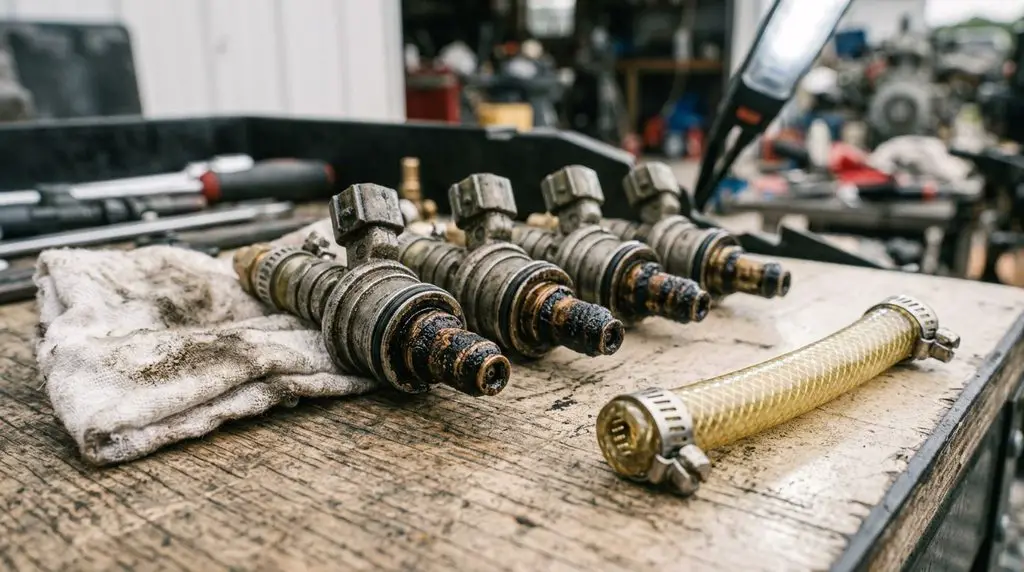
With the injectors off the engine, look at the tips. They’re filthy.
Take a rag with some Power Tune on it and clean the tip until the dirt is gone. This is before anything else, because you don’t want that crud getting pushed back into the nozzle.
Pull The O-Rings
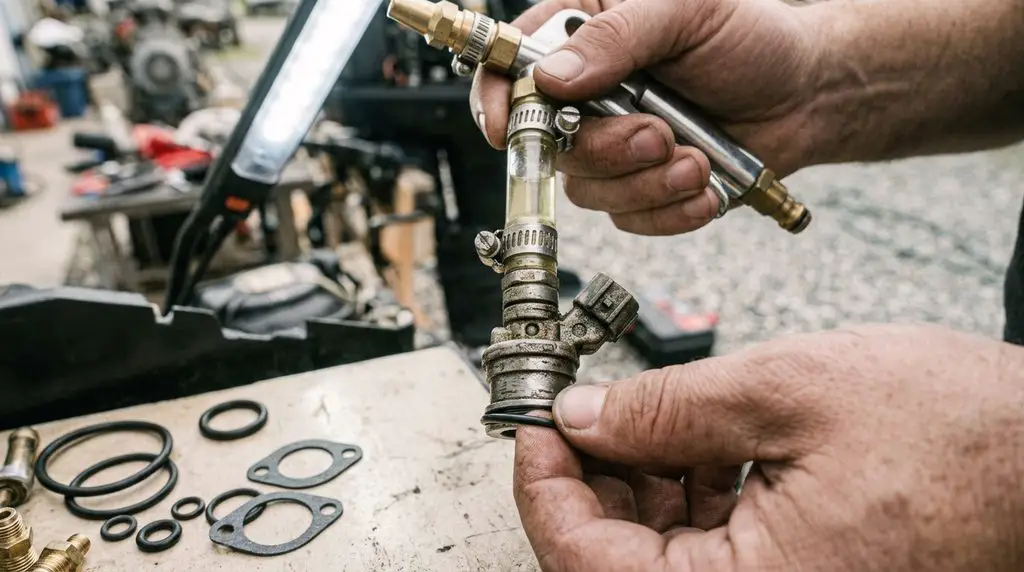
Carefully remove the rubber o-rings and gaskets from the end of the injector. Set them somewhere you won’t lose them.
Build The Rig
Attach your fuel hose to the end of the injector and tighten the hose clamp down to seal it.
Fill the hose with Power Tune, right up to the top.
Insert your air nozzle into the open end and tighten the second hose clamp around it so it’s sealed.
Pulse It
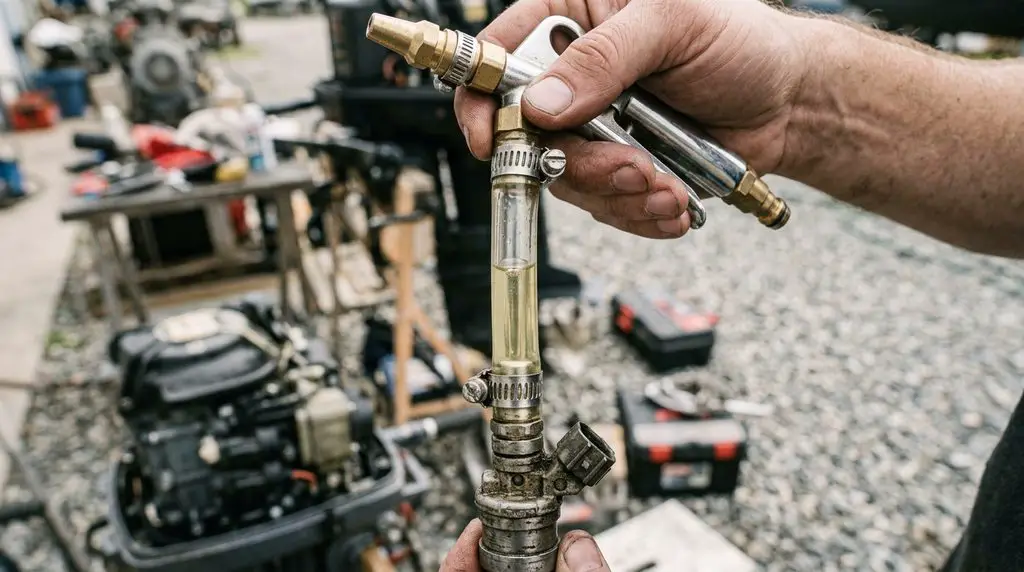
Apply air pressure to the hose, then quickly tap your wires on a battery. That sends voltage to the injector, opening and closing it, and the air pressure forces the cleaner through.
Keep tapping until you can see Power Tune spraying or misting out of the injector.
That mist is the confirmation. It means the injector is operating and flowing.
Doing It On The Engine
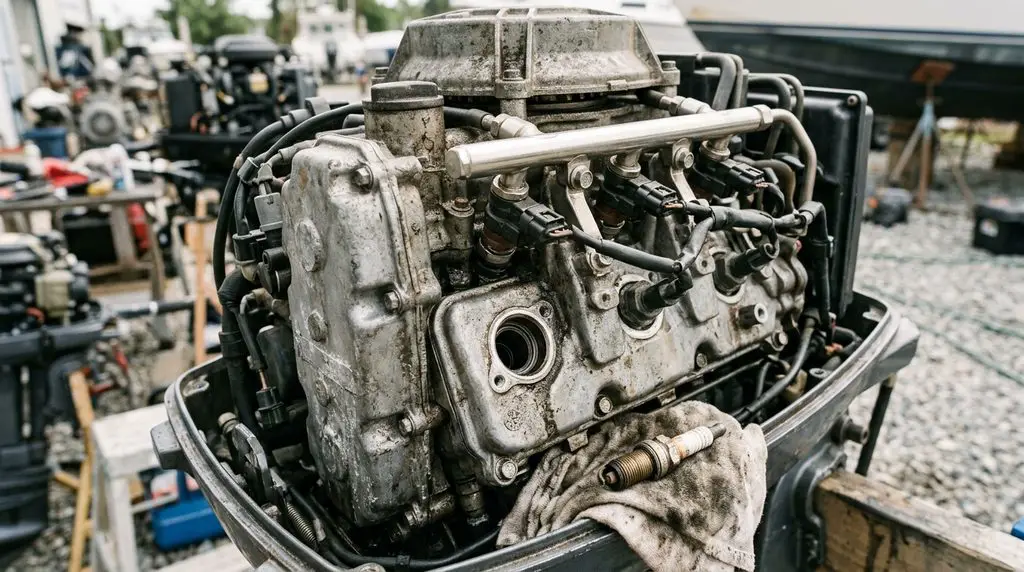
Same process, one difference. Pull the spark plug out of the head first.
When you supply power to the injector you should see Power Tune mist out of the cylinder. That tells you it’s at least flowing somewhat.
Put It Back Together
Oil the o-rings, press the rails back onto the injectors, and tighten the bolts. Hook the battery back up, put the key switch on, get running water going, and hook your clean fuel back up.
Turn the key.
What Happened On The Engine I Was Working On.
It started, then fell out, especially when I opened the throttle plates. Not enough fuel, but it’s getting some.
If I turn the key and keep squeezing the primer bulb, pushing fuel through the VST into the high pressure pump, it’ll keep idling. That’s actually good news. It tells you the injectors are flowing and the problem is upstream of them.
Three suspects left:
- The VST — could be clogged, could have a bad pump, could be a bad pressure regulator.
- The barrel fuel filter on top of the VST.
- The high pressure pump, which has filters inside that could be clogged.
I’m starting with the VST, and I’m hoping to find rust and junk inside it. I do not want it to be that barrel filter on top.
Pulling The VST
These come off easy. Unhook the strainer on top by pushing out on the black piece and sliding the hose off. Unhook the fuel pump and pull the hoses off the top of the tank. Undo the two bolts holding the plate on the bottom. Then three 10mm bolts hold the tank to the engine.
Pro Tips
Do the VST before the injectors. I did it backwards and I’m telling you not to. If the tank is full of rust and debris, you’re going to push it straight into injectors you just spent an afternoon cleaning.
The mist is your pass/fail. Don’t guess at whether an injector is clean. You either see Power Tune spraying out the nozzle or you don’t. If nothing comes through after a reasonable effort, that injector has a different problem than dirt.
Diagnose with the primer bulb. When an engine idles only while you’re squeezing the bulb, that’s a fuel supply problem, not an injector problem. It narrows your search to everything between the tank and the high pressure pump and saves you from chasing the wrong part.
Final Verdict
You can do this yourself.
Total cost is a can of Power Tune, a scrap of fuel hose, and two clamps. You need an air compressor and a battery, both of which most boat owners have. The actual work is about ten minutes per injector once you’ve got the rig built.
Compare that to new injectors, or to shipping a set out for ultrasonic cleaning and flow testing. The only thing bench cleaning won’t give you is a flow rate measurement, so if you suspect an injector is mechanically failed rather than dirty, this won’t tell you that. For dirty, it works.
The one thing I’d change is the order. Clean the VST first.
FAQ
What can I use to clean outboard fuel injectors at home?
A short piece of 5/16 or 3/8 fuel hose, two hose clamps, a can of Power Tune, a way to pulse 12V to the injector, and an air compressor. Clamp the hose to the injector, fill it with cleaner, seal an air nozzle in the other end, pressurize, and pulse the injector until cleaner mists out the tip.
Can you clean fuel injectors without removing them from the engine?
Yes. Same process, but pull the spark plug for that cylinder first so you can watch the cleaner mist into the cylinder and confirm flow.
Should I clean the VST or the injectors first?
The VST first. Debris sitting in the tank will go straight into freshly cleaned injectors otherwise.
My outboard idles but dies when I give it throttle. Is it the injectors?
Maybe, but check fuel supply first. If it keeps idling while you squeeze the primer bulb, you’ve got a delivery problem upstream of the injectors, which points at the VST, the filter on top of it, or the high pressure pump.
Check Us Out!
We hope that this has been insightful and allowed you to understand a little bit more about outboard engine maintenance and what goes into keeping your boat running right.
If you have more questions or want to learn more about your boat and its different systems, consider joining our Boating Academy where we have created HUNDREDS of video courses teaching you basically everything about your boat!
You can also find even more helpful videos on our YouTube channel where we create even more boating videos!
And if you would like to support us to continue bringing you great content, please click the link below to Amazon where we get a commission from anything you are already going to buy! Click Here To Amazon!