
Steering wheels get frozen onto the helm. Years of being gripped and cranked, salt working into the splines, and eventually it’s seized on there like it was welded.
People buy pullers for this. Others get impatient and start beating on the helm shaft, and then they’ve got a steering wheel off and a helm with wrecked threads, which is a much more expensive problem than the one they started with.
I get asked about this constantly, so here’s the way I do it. No puller, no special tools, and the threads come out clean.
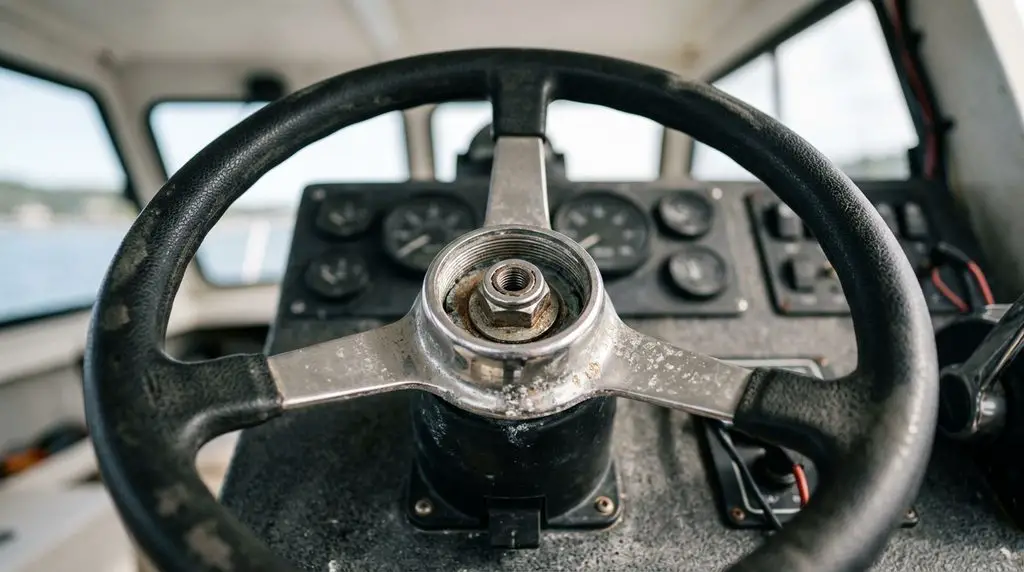
Why It Matters
The threads on your helm shaft are the whole game here. Damage them and you’re not just replacing a wheel anymore. Now the new wheel won’t seat properly, or won’t go on at all, and you’re into replacing the helm.
Down here in the salt this gets worse faster. The wheel and the shaft are usually different metals sitting in a salt-laden environment, and over a few seasons they bond. Freshwater boats seize up too, just slower.
The trick below costs nothing and takes about two minutes.
Products
- Hammer — the only tool that does the actual work.
- Flathead screwdriver or Allen key — depending on what holds your center cap.
- The helm nut itself — this is the part doing the protecting. You already own it.
Step-By-Step Guide
Get The Cap Off
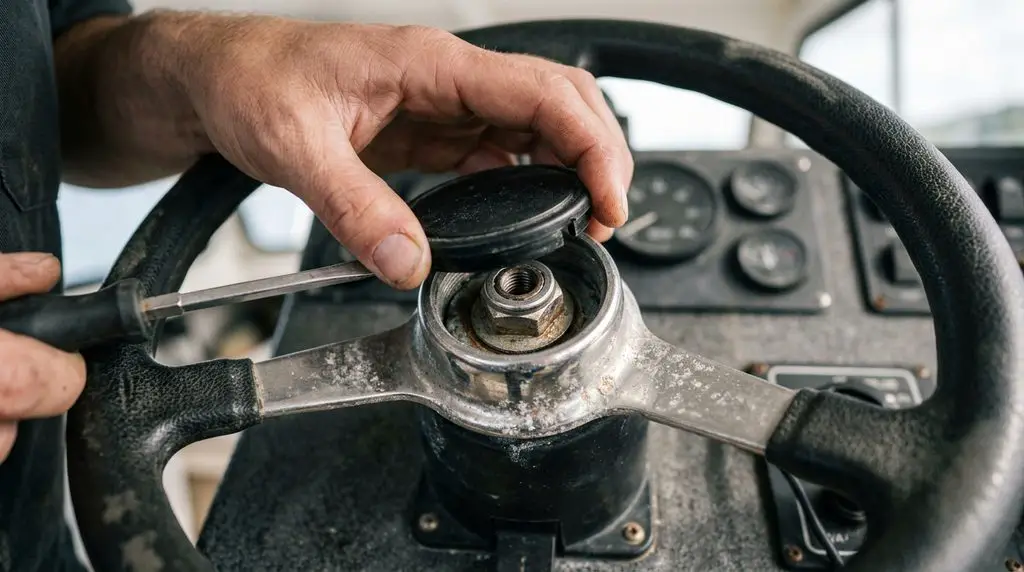
Depending on your wheel, there’s a center cap covering the nut. Underneath it you’ll find a small flat head or Allen bolt holding it in.
That bolt can be frozen too. If it is, go to the opposite side from the bolt and pry the cap out. On a plastic cap like the one I was working with, that comes out without much drama.
Remove The Nut And Washer
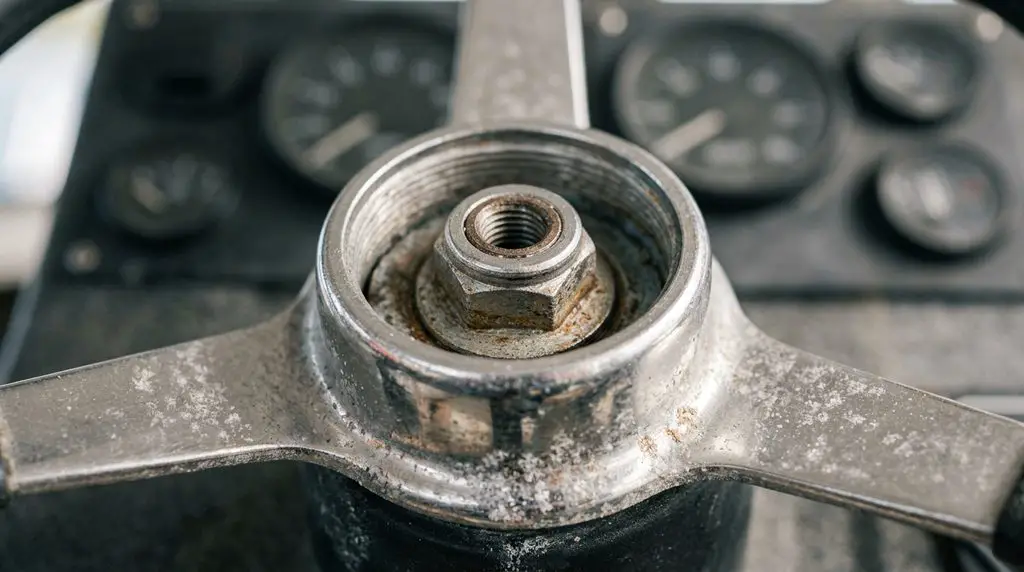
Take the nut off. If there’s a washer behind it, pull that too.
Put The Nut Back On
This is the key to the entire process, and it’s the step everybody skips.
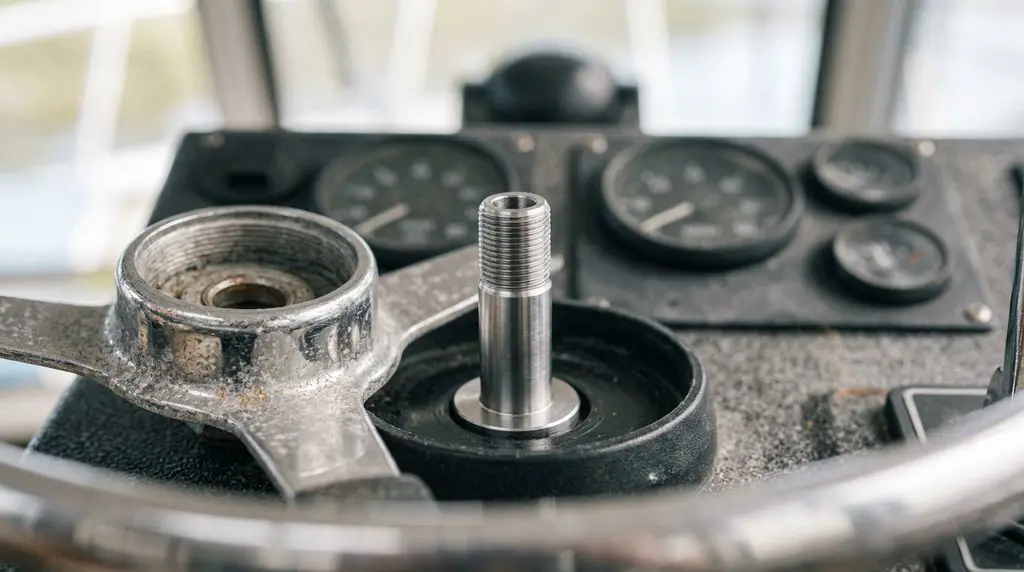
Thread the nut back onto the helm shaft so it’s sitting just past the end of the threads. Not down tight. Just flush or a hair proud of where the threads end.
That nut is now a sacrificial face. Everything you’re about to hit lands on the nut, not on the threads.
Load The Wheel
Put one leg underneath the steering wheel. Then with your arm on the other side of the wheel, push outward against it with as much pressure as you can manage.
You’re preloading the wheel so it’s already under tension pulling away from the helm. That’s what lets it release.
Hit The Nut
Hit the nut with a hammer.
The wheel pops right off the helm against the nut. That’s it. Remove the nut, pull the wheel off.
Pro Tips
The leg underneath is not optional. The pre-load is doing as much work as the hammer. Hit the nut on an unloaded wheel and you’re just transmitting shock into the helm with nothing pulling the wheel off. Load it first, then hit it.
Thread depth matters. If you run the nut too far down, the wheel hits the nut before it clears the threads and you’ve accomplished nothing. Too far out and you’ve got less engagement holding the nut on. Just past the end of the threads is the spot.
If the center cap bolt is seized, pry from the opposite side. Don’t fight a frozen set screw and round it out. Get a pry bar or screwdriver on the far side of the cap and pop it. You can deal with the bolt once the cap is off and you can see it.
Final Verdict
Do this yourself. There’s no version of this job that justifies a shop visit or a puller purchase.
The whole thing hinges on one idea: protect the threads with the nut you already removed. Everybody who has destroyed a helm doing this skipped that step and hit bare threads.
Two minutes, a hammer, and your own body weight.
FAQ
How do I remove a frozen boat steering wheel without a puller?
Remove the center cap and the nut, thread the nut back on so it sits just past the end of the threads, put a leg under the wheel and push outward with your arm, then hit the nut with a hammer. The wheel pops off against the nut.
Will hitting the helm shaft damage the threads?
Yes, if you hit them directly. That’s why the nut goes back on first. The hammer strikes the nut face and the threads never take the impact.
Why does a steering wheel get stuck on the helm?
Years of load from gripping and turning, plus corrosion between the wheel hub and the shaft. Saltwater boats seize faster, but freshwater boats get there too.
Check Us Out!
We hope that this has been insightful and allowed you to understand a little bit more about outboard engine maintenance and what goes into keeping your boat running right.
If you have more questions or want to learn more about your boat and its different systems, consider joining our Boating Academy where we have created HUNDREDS of video courses teaching you basically everything about your boat!
You can also find even more helpful videos on our YouTube channel where we create even more boating videos!
And if you would like to support us to continue bringing you great content, please click the link below to Amazon where we get a commission from anything you are already going to buy! Click Here To Amazon!