I’m personally a fan of overpowering. All my boats have been overpowered. My 20 foot Wellcraft had a 250 on it, and I beefed up the transom to handle it. It’s your boat. You can do whatever you want with your stuff.
The long version is where it gets interesting, because almost nobody asking this question is thinking about the transom, the weight distribution, or who’s holding the bag when something goes wrong.
Why It Matters
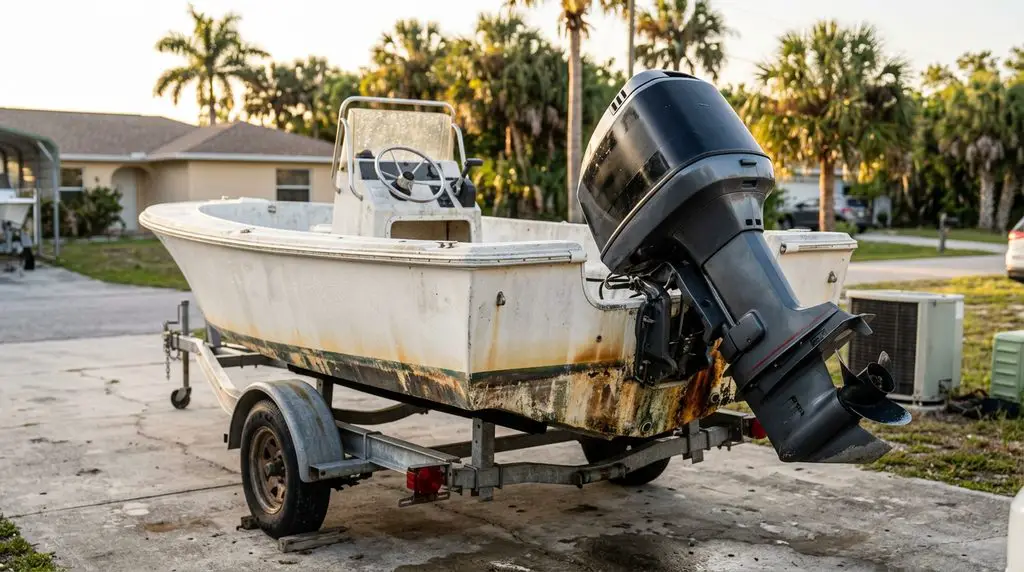
The hull rating isn’t arbitrary. Your hull is designed for a certain amount of horsepower because there’s a hull speed, a performance envelope, and in a lot of cases a stability limit. Push it far enough past that and the boat gets unstable and uncontrollable.
Then there’s the part people skip. You are responsible. If you fall out of your boat and it runs somebody over, that’s on you whether there’s a 20 horse or a 600 back there. Rewire your boat and burn it to the ground, that’s on you too. Overpowering just raises the stakes on everything.
What The Law Actually Says
Google it and what comes back is that the horsepower rating is enforceable up to a 20 foot boat. I’ll say up front that I’m not an attorney and Google has betrayed me before, so don’t take this as the end all be all.
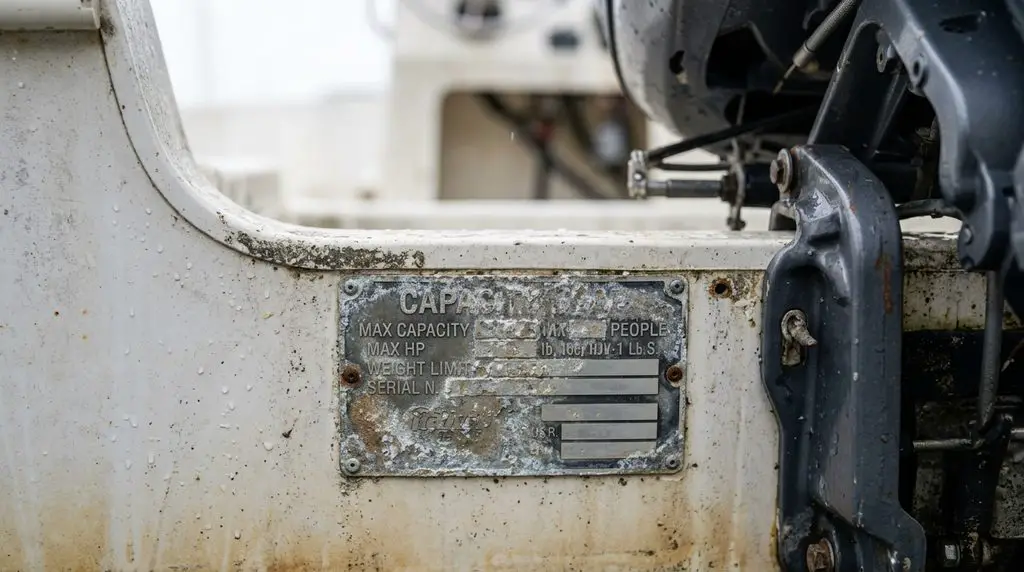
It does line up with what I see in practice though. Boats with an NMMA plate have ratings for horsepower, weight capacity, and the other factors that determine whether a hull stays stable. Yacht-rated boats, your Yellowfins and Tiaras, have no horsepower rating at all. That’s captain’s discretion.
Will the Coast Guard pull you over for it? Most of the time, no. Unless it’s astronomical. Put a 600 on the back of a 13 foot Whaler and you’re going to turn some heads. That thing’s going to sit like a bobber.
Why Dealers Won’t Do It
This trips people up. You walk into a dealership with an 18 foot boat rated for 90 and ask for a 115, and they tell you no.
It’s not that they can’t physically do it. It’s that they’re a certified dealer and the certified rating is 90. The moment they knowingly overpower it, everything that happens afterward falls back on them. If somebody drives that boat into a bridge, the argument in court is that the boat was unsafe to operate because it was overpowered. Gross negligence. Even in a drunk driving case, insurance gets involved and it gets messy fast.
So the dealer’s answer is always going to be no. That’s a liability position, not a mechanical one.
The Transom Is The Real Limit
Here’s what I’d actually worry about, and it has nothing to do with the sticker.
Boats designed 25 or 30 years ago were built around two stroke weight. A 25 year old 18 foot Mako designed for a 90 or 115 two stroke is a completely different weight calculation than the same boat with a four stroke hanging off it. The rest of the boat weighs what it always weighed. All you changed is the back.
We replaced a 90 two stroke with a 90 four stroke on one boat and the extra weight put the scuppers underwater. Every time you use it, it feels like it’s about to sink.
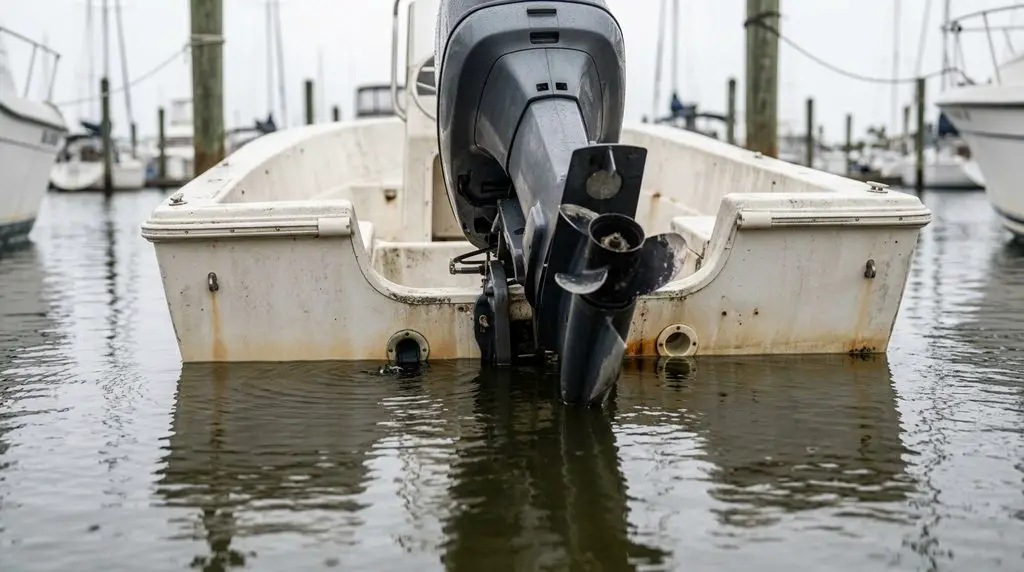
And if your transom is already 25 or 30 years old, it’s probably on its last leg anyway. If it’s getting questionable with the 90 on there, adding torque isn’t going to help.
The Rybovich
Best example I’ve got. That boat had twin OX66 250s on it. We repowered it with twin 300Rs.
A 300R weighs only about 30 pounds more than a 250, and that’s what makes those engines so impressive. The power to weight ratio is astronomical. They’re making somewhere around 320 to 326 horsepower at the prop, not at the flywheel. Legal limit on the rating tolerance is about 10 percent, so that’s right at the ceiling of what they can call a 300.
First time those engines were on that boat, it almost tore the transom out. You’d bang them in reverse and watch the transom swing three or four inches. With $70,000 of engines hanging on it.
The transom wasn’t bad. It just couldn’t handle the power. Those OX66s were never putting that down.
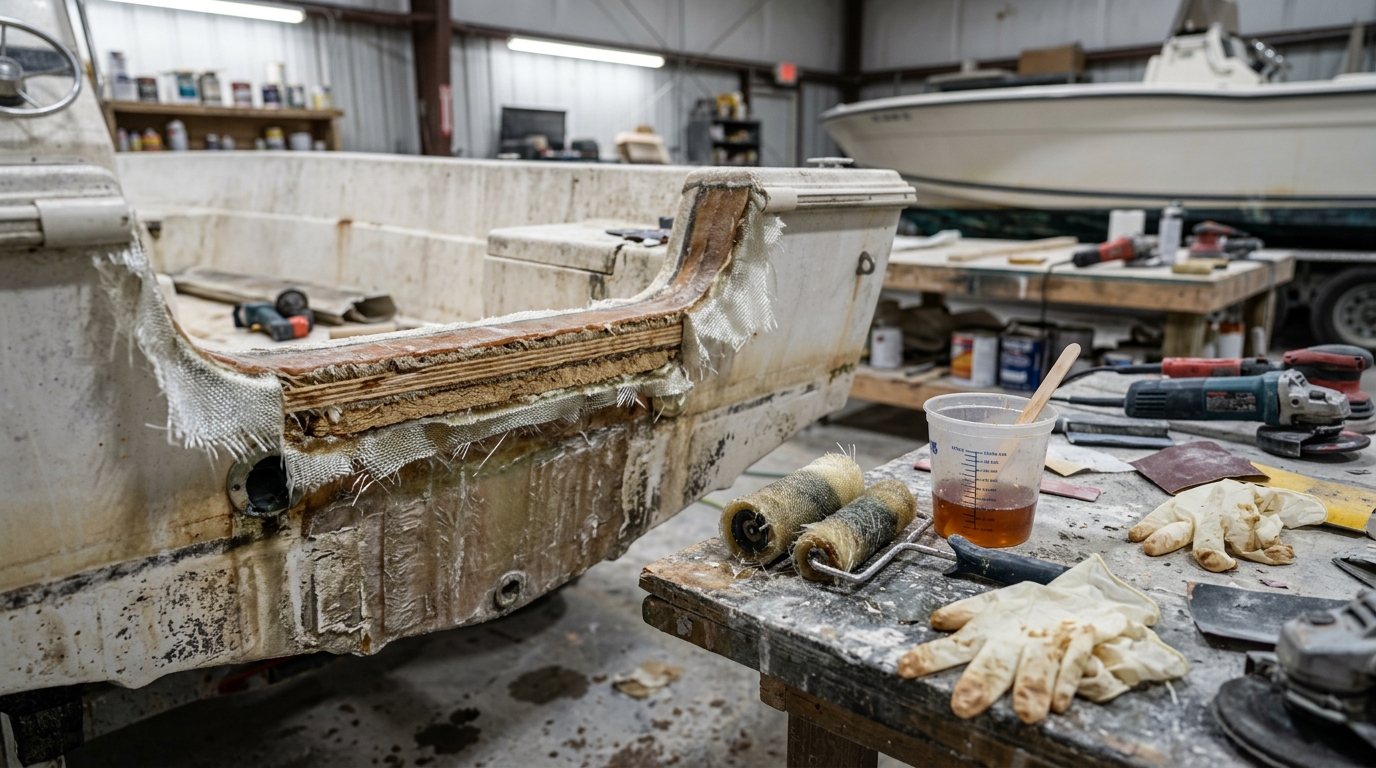
That’s why that boat got the full fabrication treatment. Coosa board, which is a woven composite that doesn’t rot and doesn’t soak up water. The layup goes glass, Coosa, glass, Coosa, glass, with the number of layers depending on how thick the original transom was. No wood in it at all.
Call The Manufacturer
This is the move most people don’t know about.
Say a builder makes a boat in 2005 with 300s on it and a plate rated for 300 max. Ten years later nothing’s changed about the hull, but now a 350 is available and the 2015 version of the same boat comes rated for it. Same hull, same transom, same boat.
The manufacturer has done the testing. They have the notes. Contact them and a lot of them will tell you what that hull is actually capable of, and there’s room to work with that plate on their authority rather than yours.
That’s a legitimate path to more power. Guessing isn’t.
Pro Tips
Stern lift beats brute force. If the back of your boat is squatting from engine weight, some people build sealed boxes on the transom that hold air to create flotation and lift the stern. I wouldn’t call them ballast tanks, since ballast on a wakeboard boat means the opposite, filling with water to add weight. Flotation box is closer.
Twins over a big single if the budget allows. On anything 30 foot and up I’d take twins every time. Maneuverability, and if one goes down you still run the boat. A 600 is around 1,290 pounds. Hanging one of those on a 30 footer is a strange choice, and somebody already put one on a pontoon.
Document it when you sell. On the overpowered boats I’ve done, I’ve had buyers sign a disclosure acknowledging the boat is overpowered and that they understand what they’re taking on. Whether that fully holds up, I’d want an attorney’s read. But signing nothing is worse.
Final Verdict
Within reason, yes. A 90 to a 115 or 125 on an 18 foot boat isn’t exotic. People do it constantly, usually because once you load a cooler and the family in, the 90 isn’t cutting it.
But do it with your eyes open. Check what shape your transom is in before adding torque to it. Think about whether the hull was designed around two stroke weight. Call the manufacturer if there’s a newer version of your hull rated higher. And understand that nobody else is absorbing the liability. Not the dealer, not the manufacturer, not your insurance company.
FAQ
Is it illegal to overpower a boat?
From what I can find, the horsepower rating is enforceable up to 20 feet. Above that it gets murkier. I’m not an attorney and you should verify it for your state, but either way you carry the liability regardless of what the law says about the sticker.
Why won’t a dealer install a bigger engine than my plate says?
Liability. They’re a certified dealer and the boat’s certified rating is what it is. Knowingly overpowering it moves responsibility onto them for anything that happens afterward.
Do I need to reinforce my transom to repower?
Depends on the age and condition. A 25 or 30 year old transom designed around two stroke weight is the one to worry about. Modern four strokes are heavier than what those boats were built for, and more horsepower means more torque loading on it.
Can I get my capacity plate changed?
Contact the manufacturer. If they’ve built the same hull with higher-rated engines in later model years, they’ve got the testing to back a higher number and can tell you what that hull will actually support.
Check Us Out!
We hope that this has been insightful and allowed you to understand a little bit more about outboard engine maintenance and what goes into keeping your boat running right.
If you have more questions or want to learn more about your boat and its different systems, consider joining our Boating Academy where we have created HUNDREDS of video courses teaching you basically everything about your boat!
You can also find even more helpful videos on our YouTube channel where we create even more boating videos!
And if you would like to support us to continue bringing you great content, please click the link below to Amazon where we get a commission from anything you are already going to buy! Click Here To Amazon!